Today's date is: October 5, 2026
Genesis Chapter 26
Isaac, Rebekah, and Abimelech
The Wells of Isaac and the Covenant of Peace
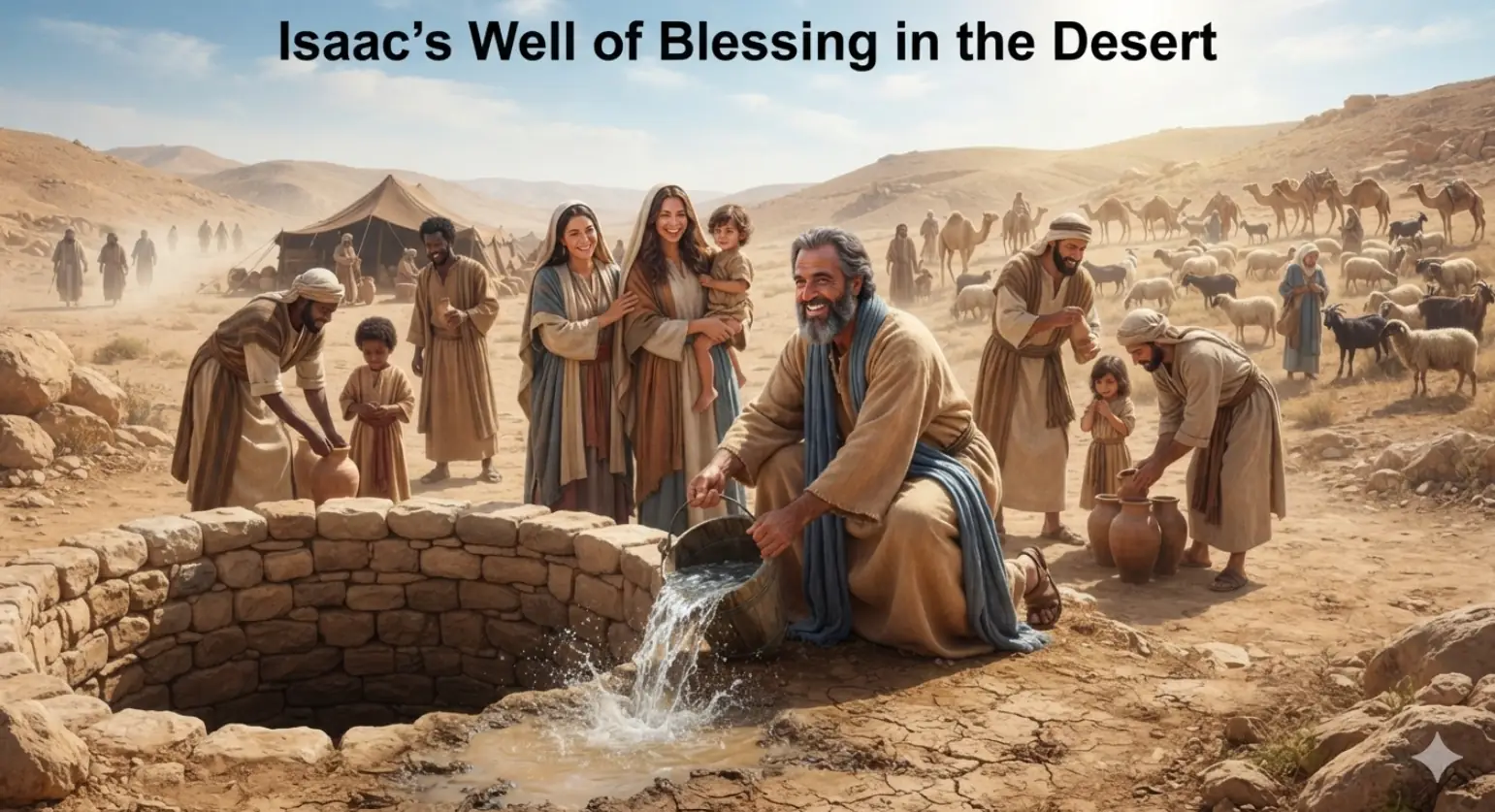
Genesis Chapter 26 focuses entirely on the life of Isaac, mirroring many of the trials, deceptions, and blessings previously experienced by his father, Abraham. The chapter serves as a critical bridge, showing God reaffirming the Abrahamic covenant directly to Isaac while he navigates conflict with neighboring Philistines.
God's Promise and the Famine (26:1–5)
Genesis Chapter 26 centers on God’s reaffirmation of the Abrahamic covenant with Isaac during a time of famine, highlighting both divine faithfulness and human flaws.
- The Famine:
A severe famine strikes Canaan, tempting Isaac to flee to Egypt, the traditional breadbasket.
- The Command:
God appears to Isaac at Gerar and explicitly tells him not to go to Egypt, but to stay in the land.
- The Covenant:
God's Promise to Isaac reiterates the promises made to Abraham—multiplying his descendants like the stars and granting them the land—because of Abraham's obedience.
The Deception in Gerar (26:6–11)
- The Lie:
Fearing for his life because of Rebekah’s striking beauty, Isaac tells the men of Gerar that she is his sister, mirroring Abraham’s past actions.
- The Discovery:
King Abimelech uncovers the truth after seeing Isaac caressing Rebekah.
- The Rebuke:
Abimelech scolds Isaac for the grave risk of allowing someone to unknowingly sleep with his wife, then issues a strict decree protecting the couple.
Prosperity and the Wells of Strife (26:12–25)
- Abundant Harvest:
Isaac reaps a hundredfold in a single year and grows immensely wealthy, fueling Philistine envy.
- Plugging the Wells:
Out of jealousy, the Philistines fill in the wells previously dug by Abraham’s servants.
- Redigging and Naming:
Isaac moves and re-digs old wells, encountering contention at Esek (Contention) and opposition at Sitnah (Hatred), before finding peace and space at Rehoboth (Room) and moving onward to Beersheba.
The Covenant with Abimelech and Esau's Marriages (26:26–35)
- The Peace Treaty:
King Abimelech, joined by his adviser Ahuzzath and army commander Phicol, visits Isaac at Beersheba.
- Recognizing God's Favor:
Acknowledging that the Lord is clearly with Isaac, they establish a formal peace and mutual protection over a feast.
- Esau's Grief-Causing Marriages:
At age 40, Esau marries two Hittite women (Judith and Basemath), which causes deep emotional distress and bitterness for Isaac and Rebekah.