Today's date is: October 6, 2026
Genesis Chapter 28
Jacob and Esau
Jacob's Arrival in Haran and the Encounter at the Well
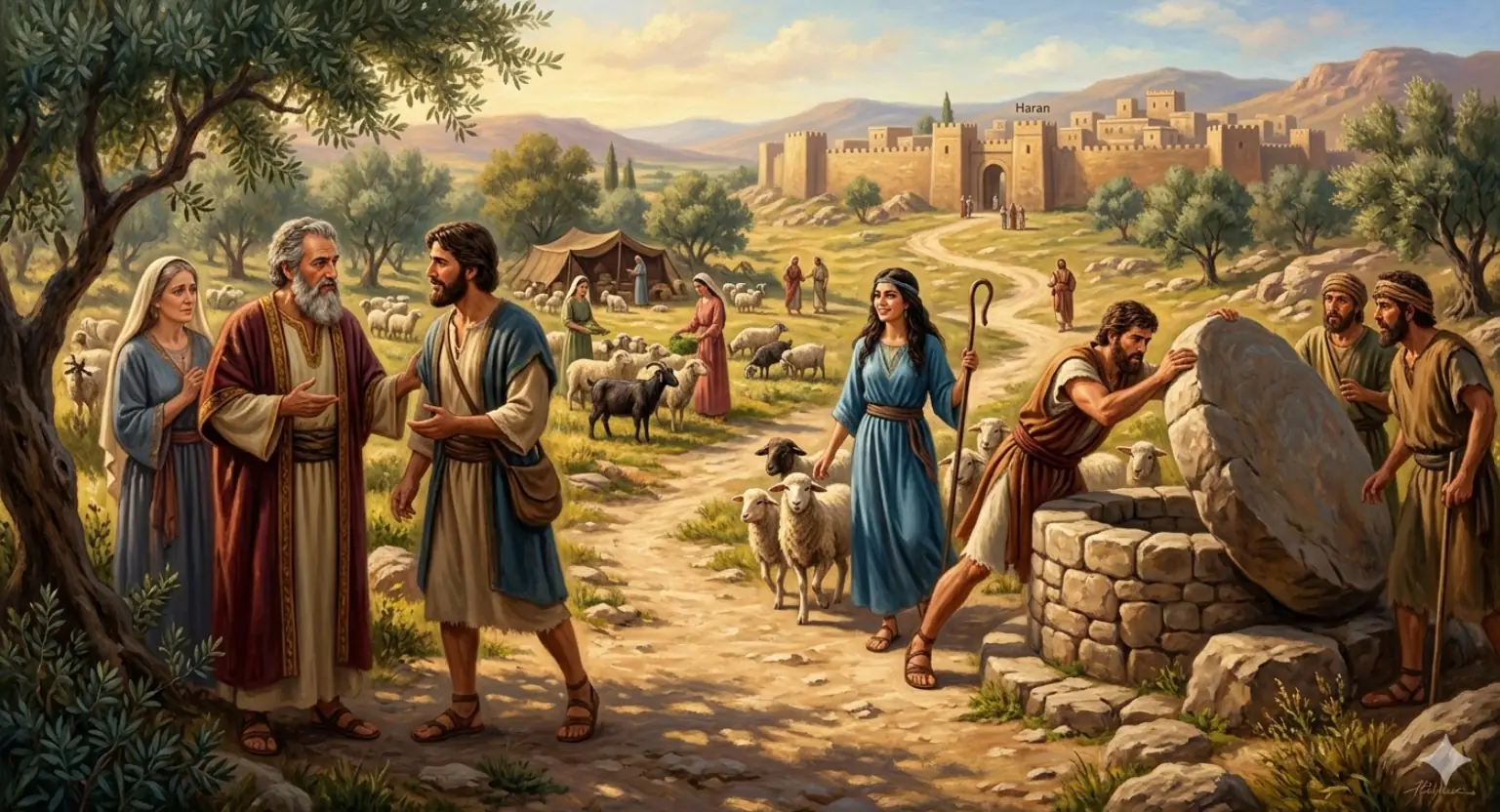
Genesis Chapter 29 follows Jacob as he arrives in Haran, falls in love with Rachel, is tricked into marrying her older sister Leah instead, and ultimately marries both.
Arrival and Meeting at the Well (29:1–14)
Jacob arrives in Haran, meets Rachel at the well, and agrees to work seven years for her hand in marriage, only to be deceived by Laban into marrying Leah instead.
- Journey to Haran:
Jacob travels from Beersheba to the land of the east to find a wife from his mother Rebekah’s family.
- The Well Encounter:
Jacob meets local shepherds and Rachel, Laban’s daughter, who arrives to water her sheep.
- Hospitality:
Jacob rolls away the heavy stone for Rachel, reveals his identity, and Laban welcomes him into his home.
The Bargain and Deception (29:15–30)
- Seven Years of Labor:
Jacob falls in love with Rachel and offers Laban seven years of work instead of a traditional bride price.
- Laban’s Trickery:
On the wedding night, Laban substitutes his older daughter Leah for Rachel under the cover of darkness.
- The Justification:
Laban defends his action by citing local custom against marrying the younger daughter before the firstborn.
- The Double Commitment:
Jacob agrees to fulfill Leah's bridal week and works an additional seven years to marry Rachel.
The Birth of Jacob’s Sons (29:31–35)
- Divine Compassion:
God sees that Leah is unloved and opens her womb, while Rachel remains barren.
- Leah's Four Sons:
Leah bears Reuben ("He has looked"), Simeon ("Hearing"), Levi ("Attached"), and Judah ("Praise").
- Shifting Focus:
Leah's naming progression reflects her transition from seeking her husband's validation to praising God.
The People
Rachel
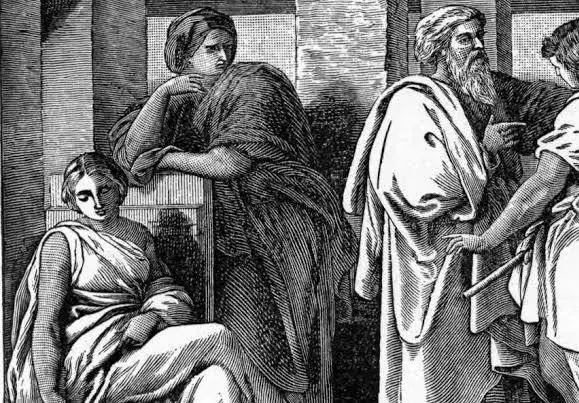
Rachel was a Hebrew Bible figure, one of the Israelite matriarchs, the favorite of Jacob's two wives, and the mother of Joseph and Benjamin, two of the twelve progenitors of the tribes of Israel.
Rachel's father was Laban. Her older sister was Leah, Jacob's first wife. Her aunt Rebecca was Jacob's mother.
Laban
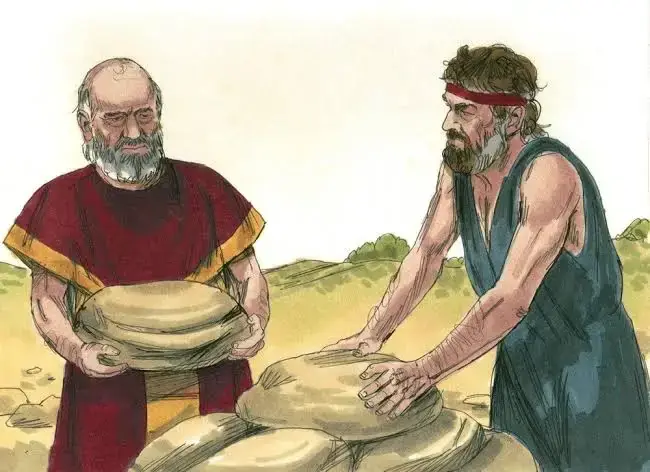
Laban, also known as Laban the Aramean, was a figure in the Book of Genesis in the Hebrew Bible.
He was the brother of Rebekah, the woman who married Isaac and bore Jacob.
Laban welcomed his nephew and set him the stipulation of seven years' labour before he permitted him to marry his daughter Rachel.
Leah
Leah appears in the Hebrew Bible as one of the two wives of the Israelite patriarch Jacob.
She was Jacob's first wife, and the elder sister of his second wife Rachel.
Jacob was tricked into marrying Leah by her father, Laban, and subsequently married Rachel.
Jacob's Sons
Reuben (son of Jacob)
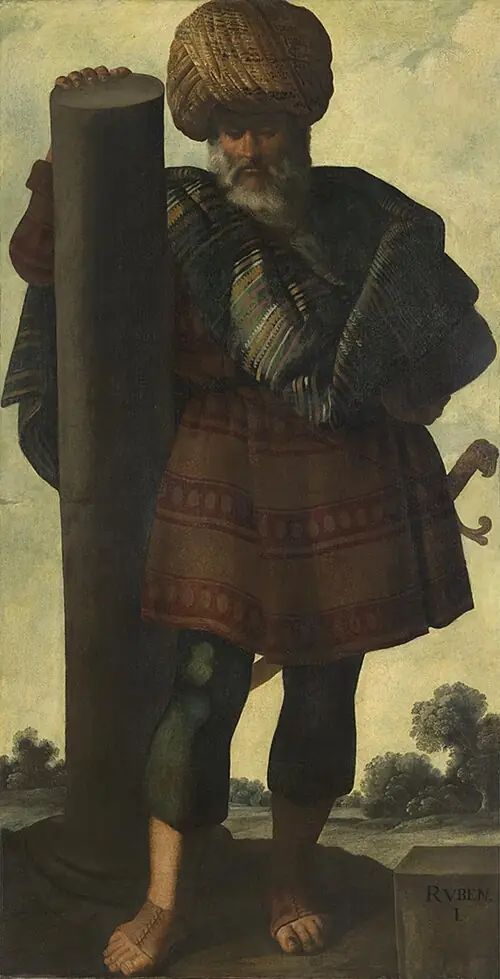
Reuben's birth is recorded in Genesis 29:32.
Later in the Book of Genesis, Reuben is briefly described as having had sexual activity with Bilhah, his stepmother's maid and father's concubine in Genesis 35:22.
On his deathbed, Jacob declares that Reuben "will no longer excel, for you went up onto your father's bed, onto my couch and defiled it".
Reuben's behaviour angered Jacob to the extent that he gave Reuben's birthright (as firstborn) to Joseph: a comment within 1 Chronicles 5:1 makes the same point.
Simeon (son of Jacob)

Simeon was the second of the six sons of Jacob and Leah, and the founder of the Israelite tribe of Simeon, according to the Book of Genesis in the Hebrew Bible.
Biblical scholars regard the tribe as part of the original Israelite confederation.
Levi (son of Jacob)
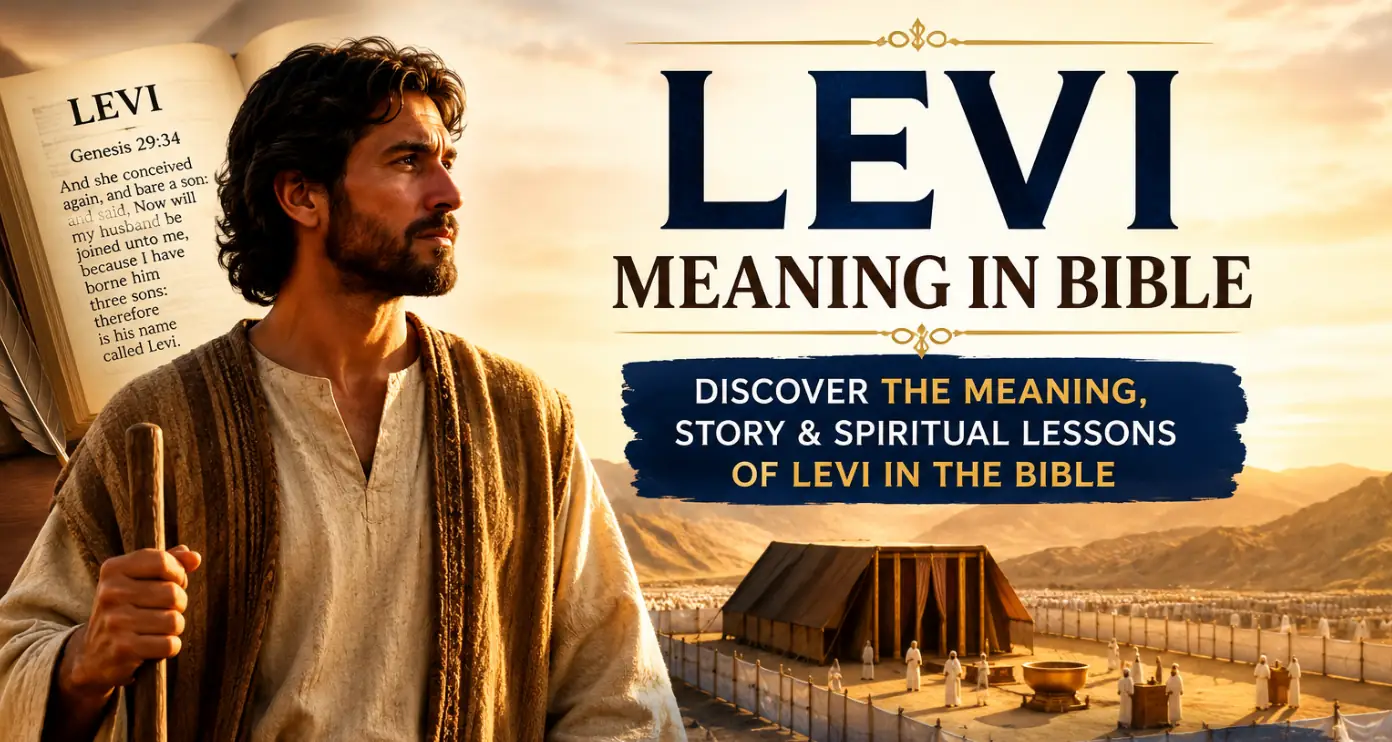
Levi (/ˈliːvaɪ/ LEE-vy; Hebrew: לֵוִי, Modern: Levī, Tiberian: Lēwī) was, according to the Book of Genesis, the third of the six sons of Jacob and Leah, and the founder of the Israelite Tribe of Levi (the Levites, including the Kohanim) and the grandfather of Aaron, Moses and Miriam.
Certain religious and political functions were reserved for the Levites.
Judah (son of Jacob)

Judah was, according to the Book of Genesis, the fourth of the six sons of Jacob and Leah and the founder of the Tribe of Judah of the Israelites.
By extension, he is indirectly the eponym of the Kingdom of Judah, the land of Judea, and the word Jew.
Certain religious and political functions were reserved for the Levites.